Destinations
A small country, many valleys
Select a place on the profile below to see what it holds — or scroll through the regions to find where your own journey might lead.
Western Bhutan
Where most journeys begin: broad valleys, great dzongs and the Tiger's Nest.
-
Valley · 2,200 m
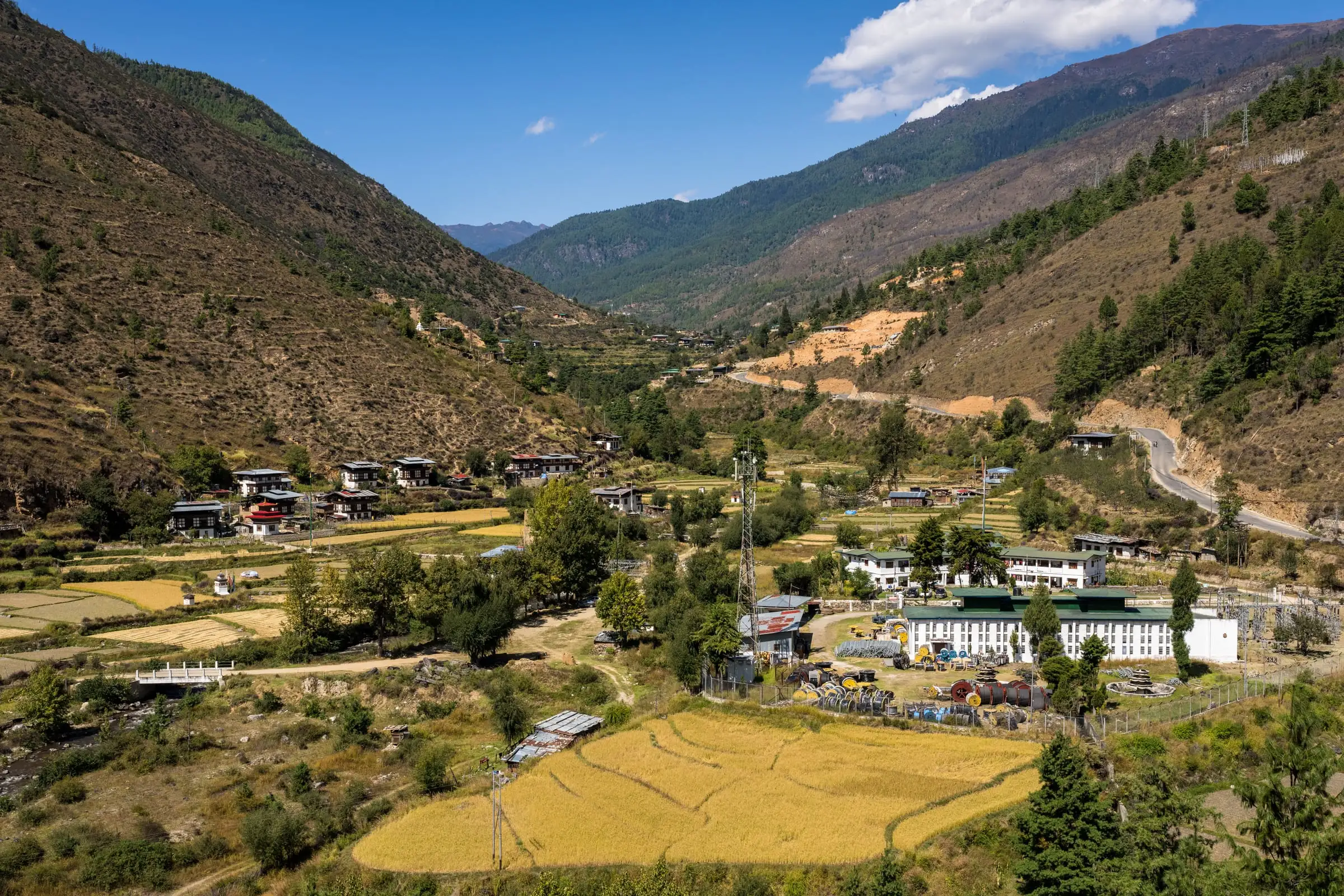
Paro
Where almost every journey begins — and where many guests wish they had stayed longer.
A broad, fertile valley of red-rice fields and farmhouses, home to the country's only international airport, the National Museum and the Tiger's Nest.
Explore Paro -
Town · 2,330 m
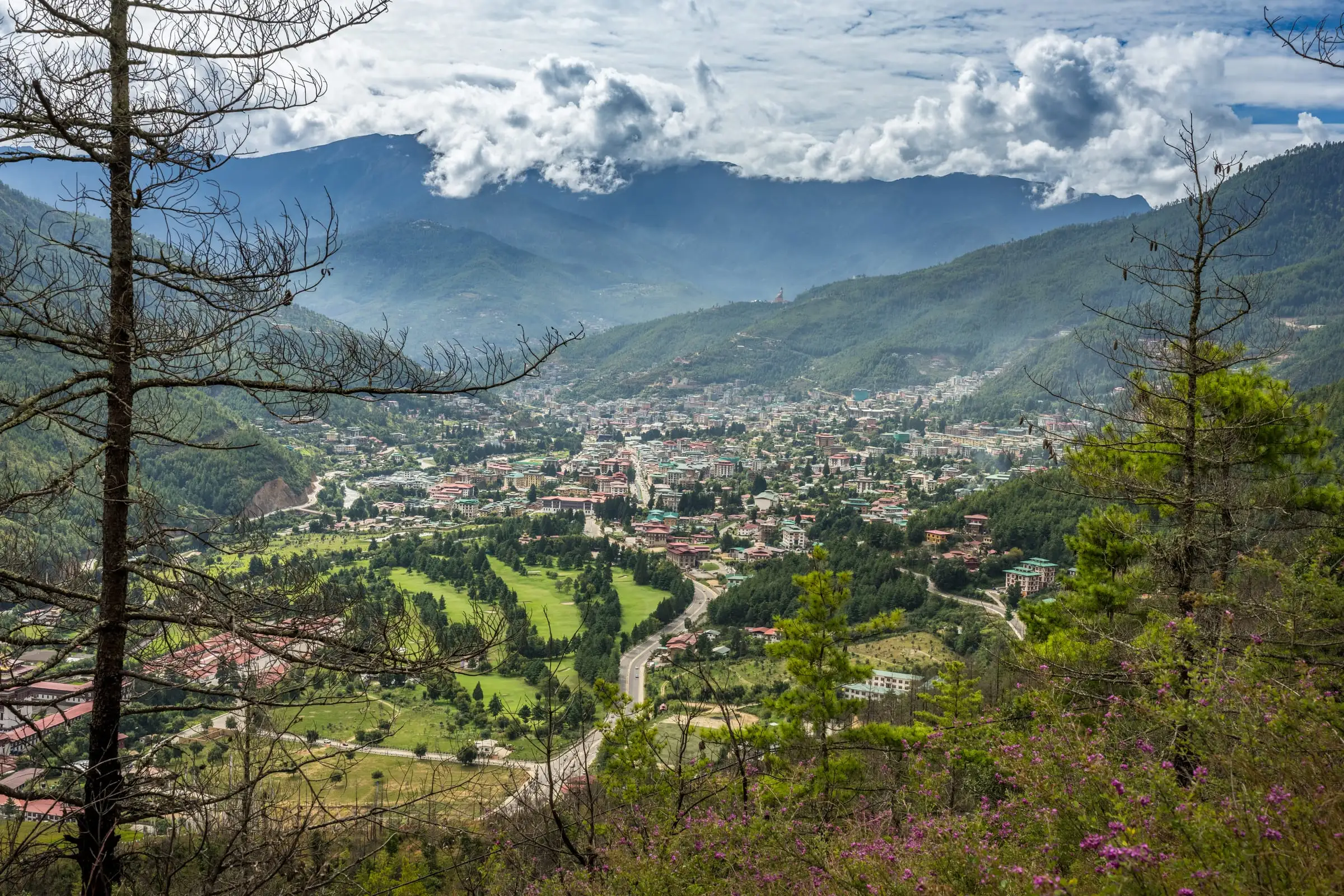
Thimphu
A capital without traffic lights, where monks, civil servants and teenagers in sneakers share the same pavements.
Bhutan's small, lively capital — seat of government and the monastic body, and the best place to understand how tradition and modern life fit together.
Explore Thimphu -
Valley · 1,250 m
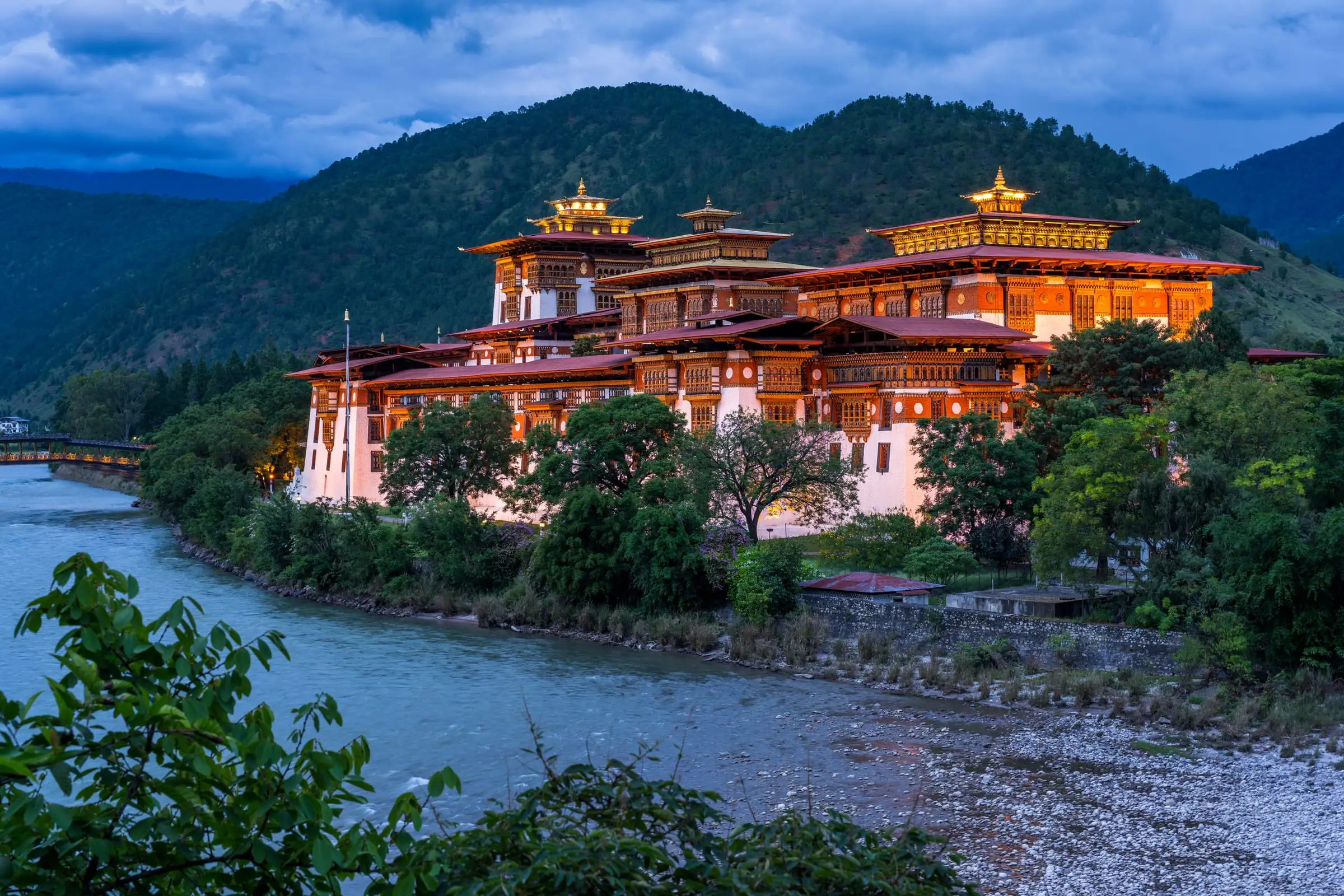
Punakha
A warm, low valley of rice and rivers, watched over by the most beautiful dzong in the country.
The old winter capital, where two rivers meet beneath Punakha Dzong and rice terraces climb the hillsides to the Khamsum Yulley chorten.
Explore Punakha -
Valley · 2,900 m
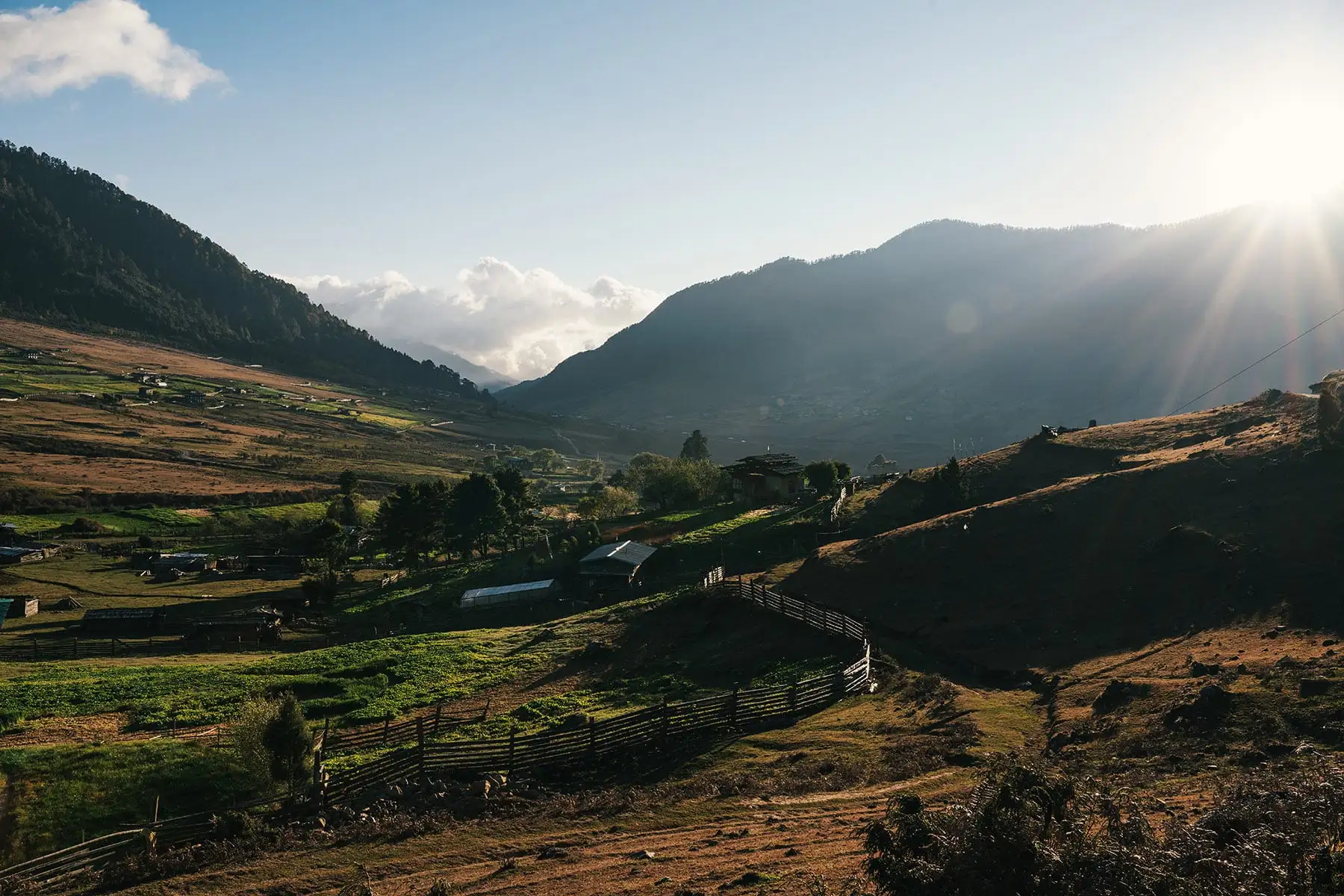
Phobjikha & Gangtey
A wide glacial valley of wetlands and potato fields, and the winter home of the black-necked crane.
Phobjikha is the valley; Gangtey Goemba is the monastery on its western ridge. Together they make one of the most peaceful places to spend a night or two in Bhutan.
Explore Phobjikha -
Mountain pass · 3,100 m
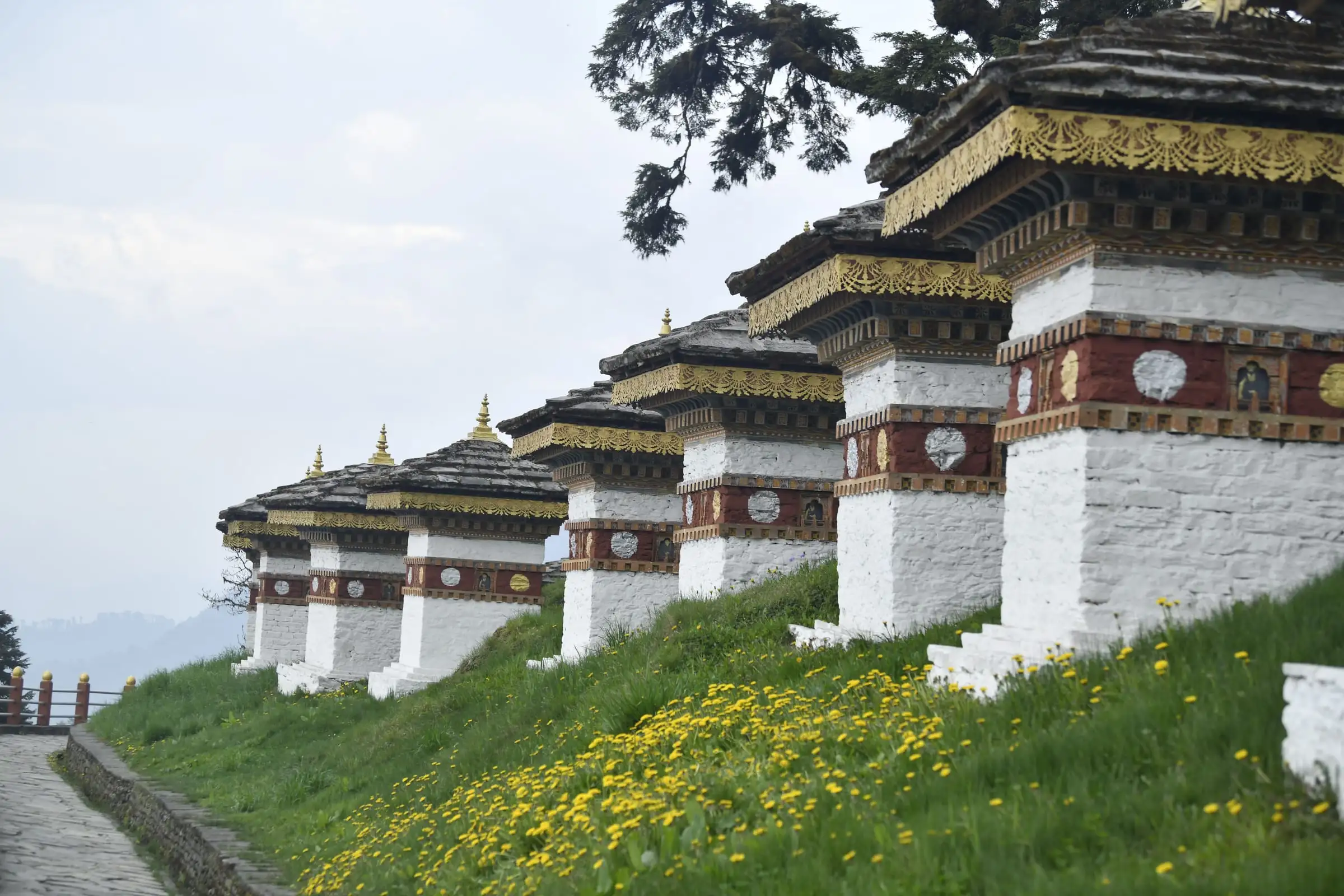
Dochula Pass
A forested saddle of 108 chortens, and — on a clear winter morning — a view across the eastern Himalaya.
The pass between Thimphu and Punakha, crowned by the Druk Wangyal chortens and temple, with walking trails into moss-draped forest.
Explore Dochula Pass -
Valley · 2,700 m
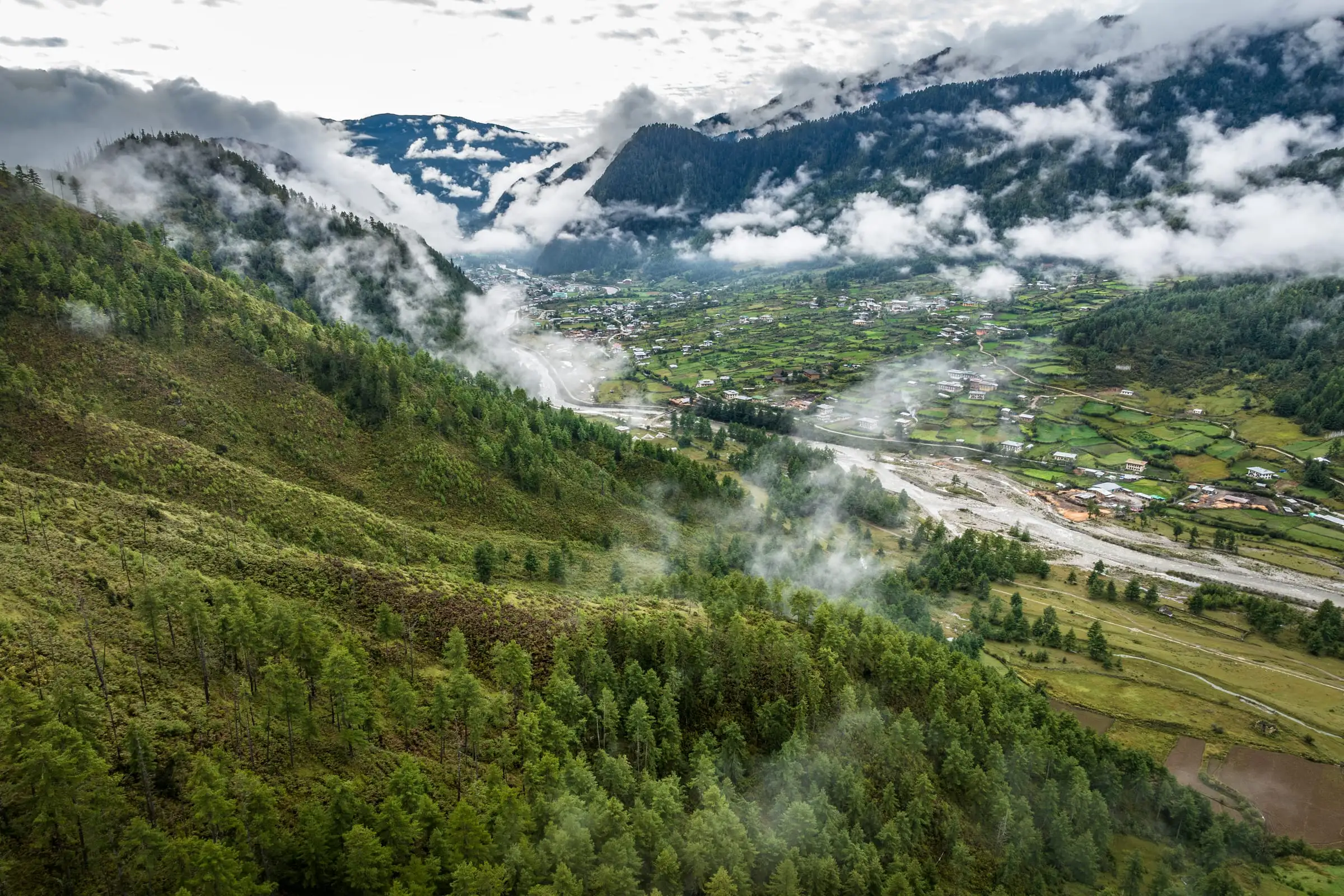
Haa
A high, quiet valley on the western frontier, reached over the highest road pass in the country.
Opened to visitors only in 2002, Haa is a place of farmhouses, yak pastures and village temples — the most traditional valley within easy reach of Paro.
Explore Haa -
Mountain pass · 3,988 m
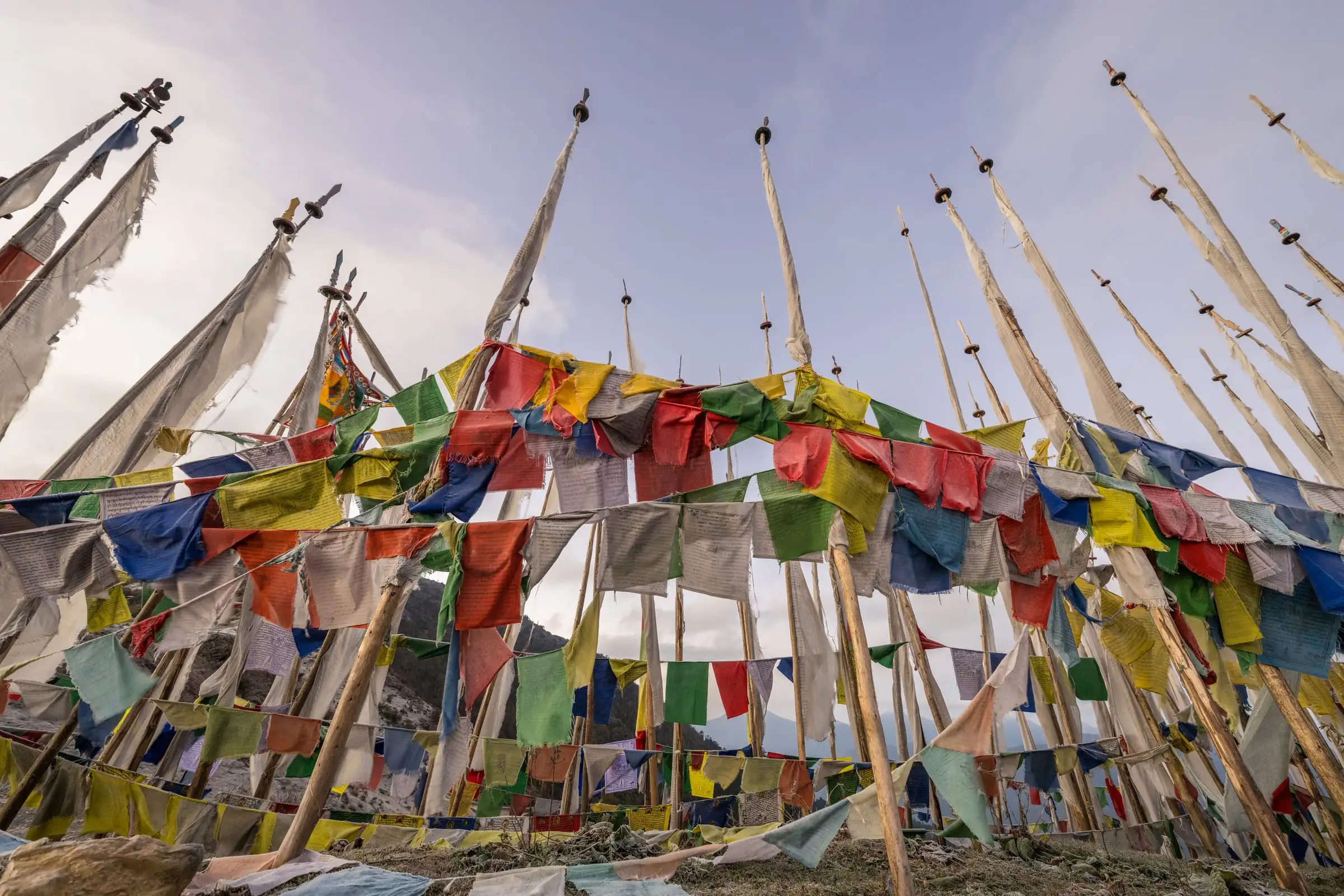
Chele La
Prayer flags, rhododendron and a clear line of sight to Jomolhari.
Usually described as the highest motorable pass in Bhutan, Chele La links Paro and Haa and makes one of the finest day hikes in the west.
Explore Chele La -
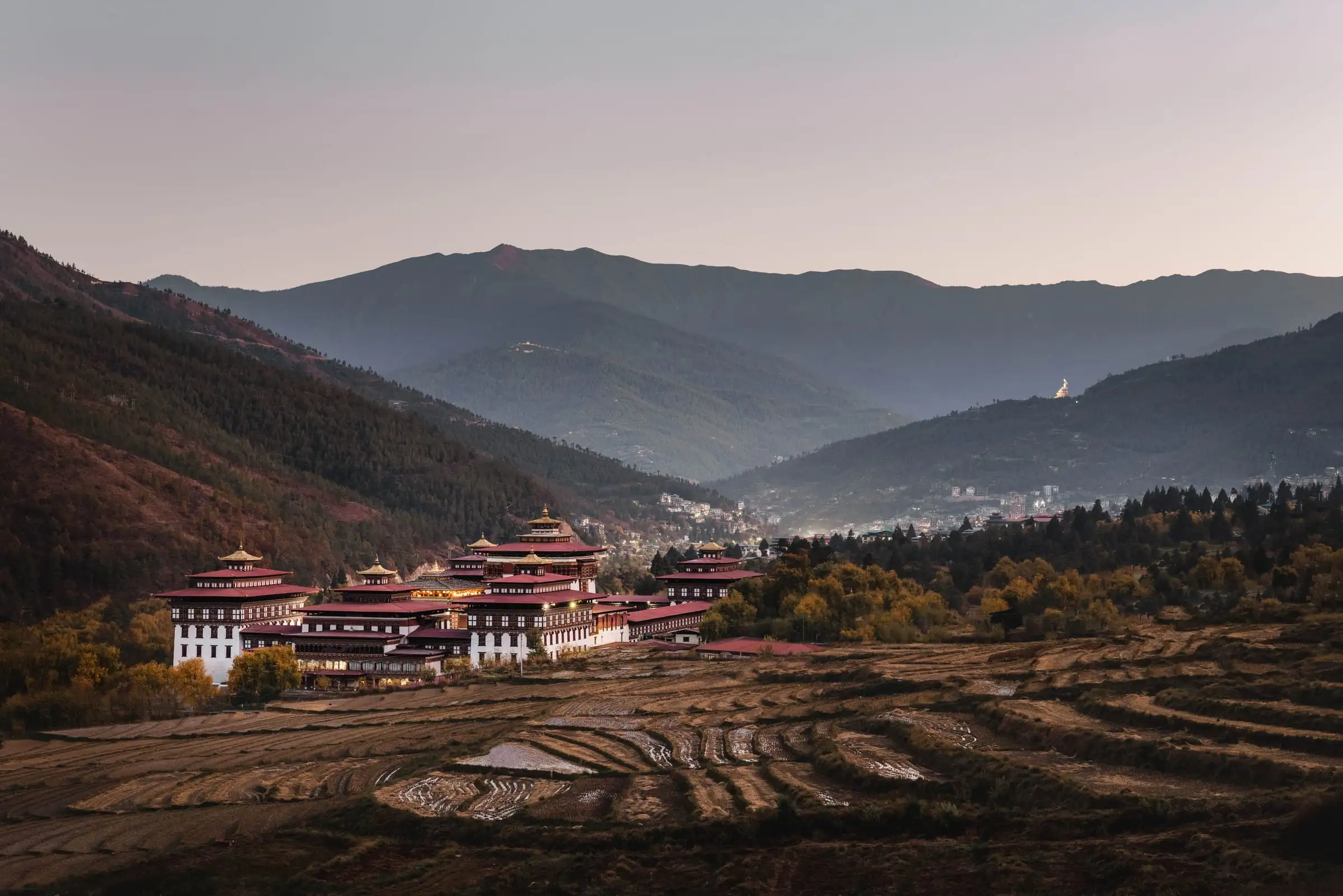
Town · 1,300 m
Wangdue Phodrang
A rebuilt fortress on a river spur, and the gateway to the central valleys.
Just south of Punakha, Wangdue is known for its dzong — painstakingly rebuilt after a fire in 2012 — and the stone village of Rinchengang across the river.
Explore Wangdue Phodrang


Central Bhutan
Beyond the Black Mountains, older temples and quieter roads.
-
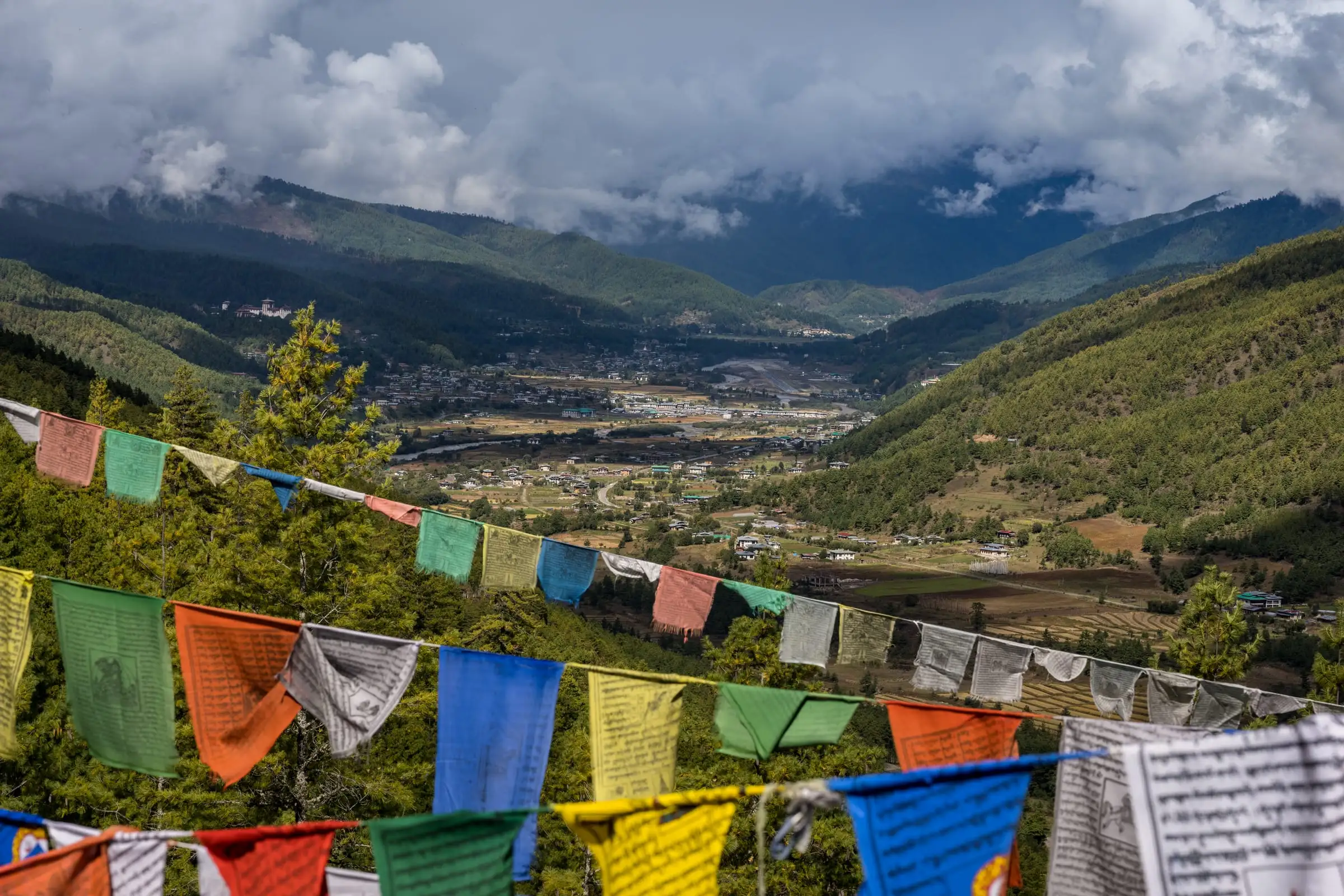
Region · 2,600 m
Bumthang
Four broad valleys, some of the oldest temples in the Himalaya, and Bhutan's spiritual heartland.
Chumey, Choekhor, Tang and Ura — high, open valleys of buckwheat fields, sacred sites and weaving villages, where Buddhism first took root in Bhutan.
Explore Bumthang -
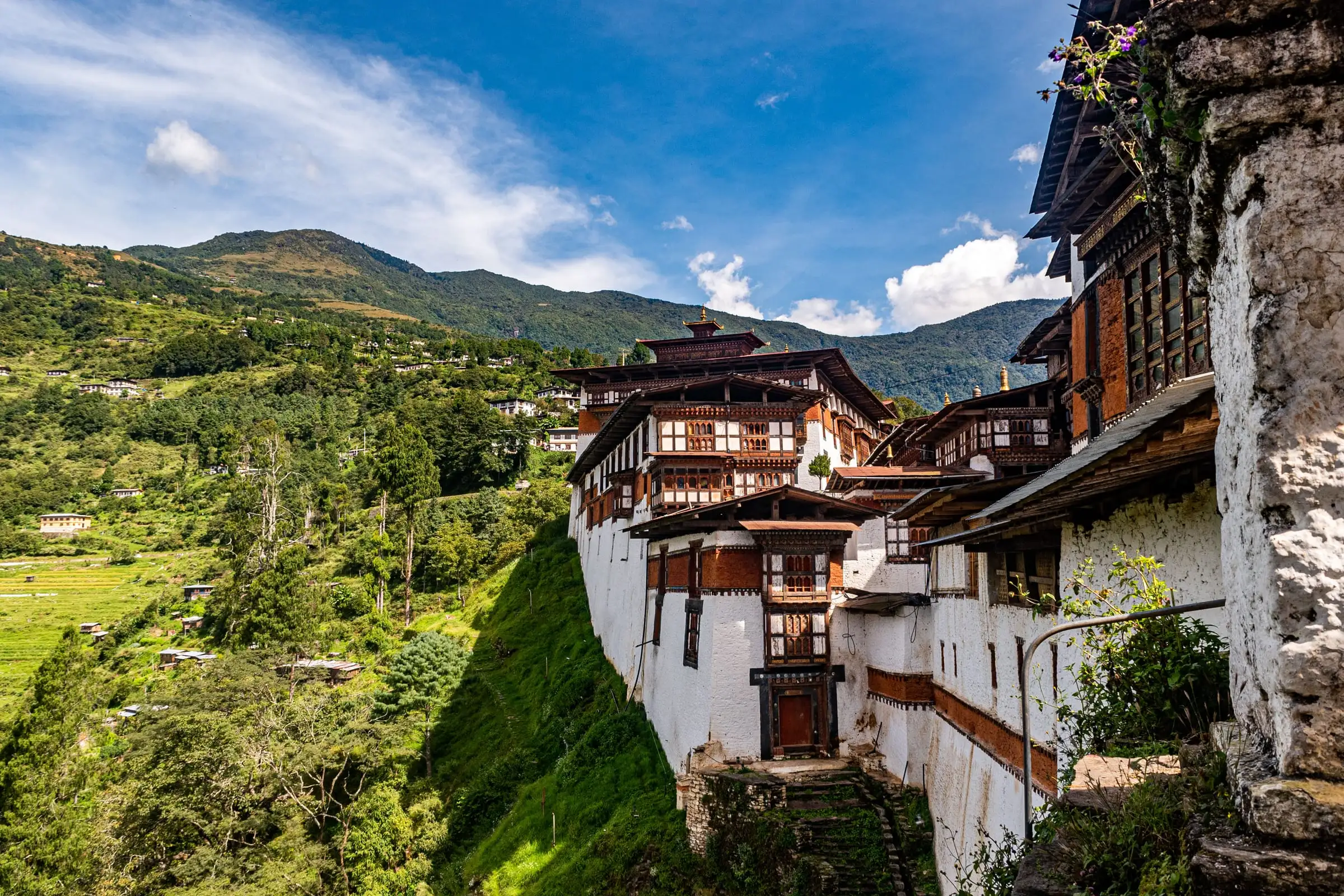
Town · 2,200 m
Trongsa
The ancestral seat of Bhutan's royal family, guarding the old route between east and west.
Trongsa Dzong, sprawling down a ridge above a deep gorge, is the largest and one of the most impressive fortresses in the kingdom.
Explore Trongsa


Eastern Bhutan
Wilder, greener and rarely visited — the Bhutan of weavers and herders.
-
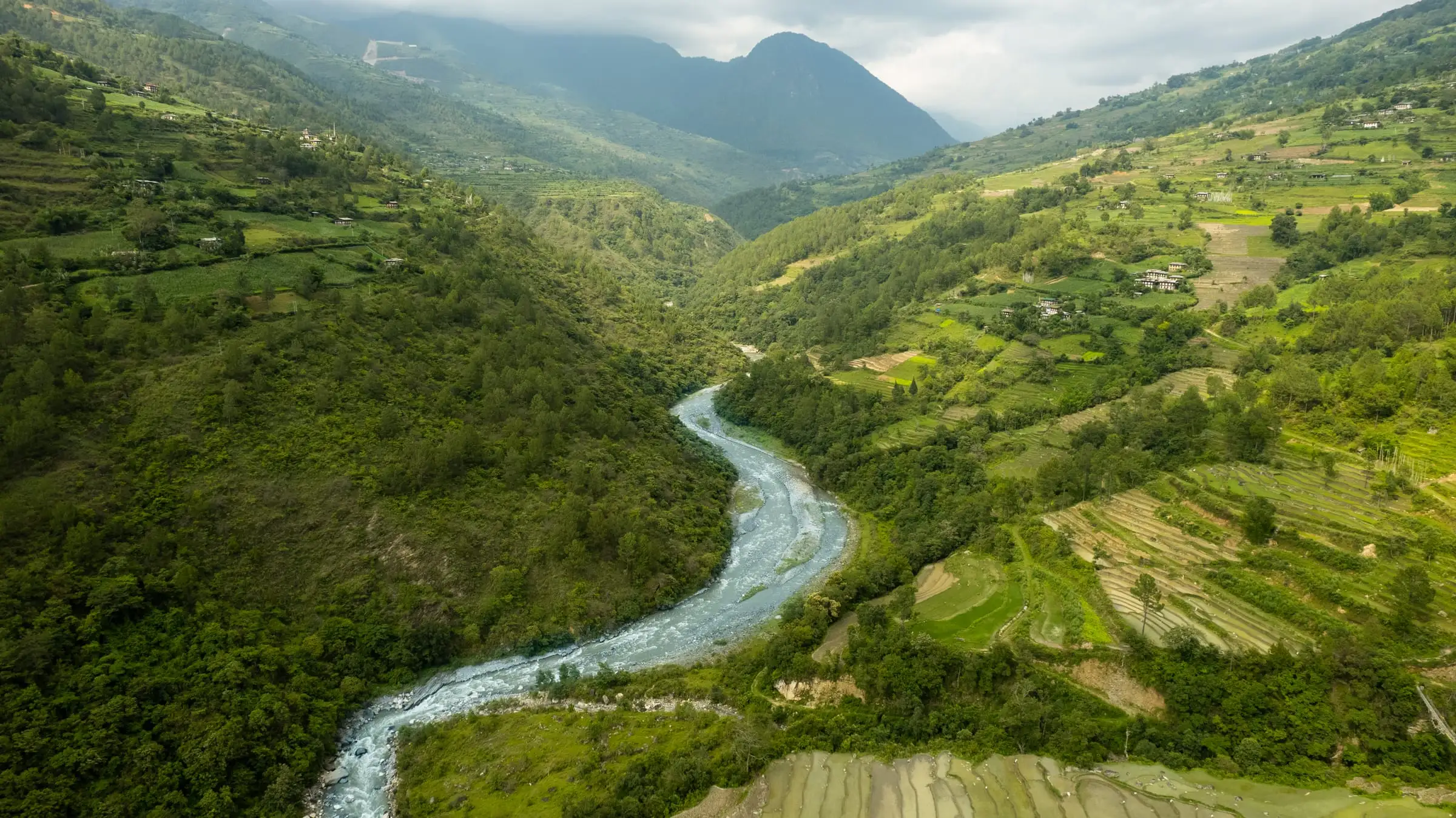
Region · 1,100 m
Trashigang
The largest district of the east — terraced hillsides, silk weavers and the high villages of the Brokpa.
Eastern Bhutan sees only a small share of visitors. Trashigang, with its cliff-top dzong and weaving villages, is the place to start exploring it.
Explore Trashigang

Southern Bhutan
The warm foothills, and the border gateways to India.
-
Town · 300 m
Phuentsholing
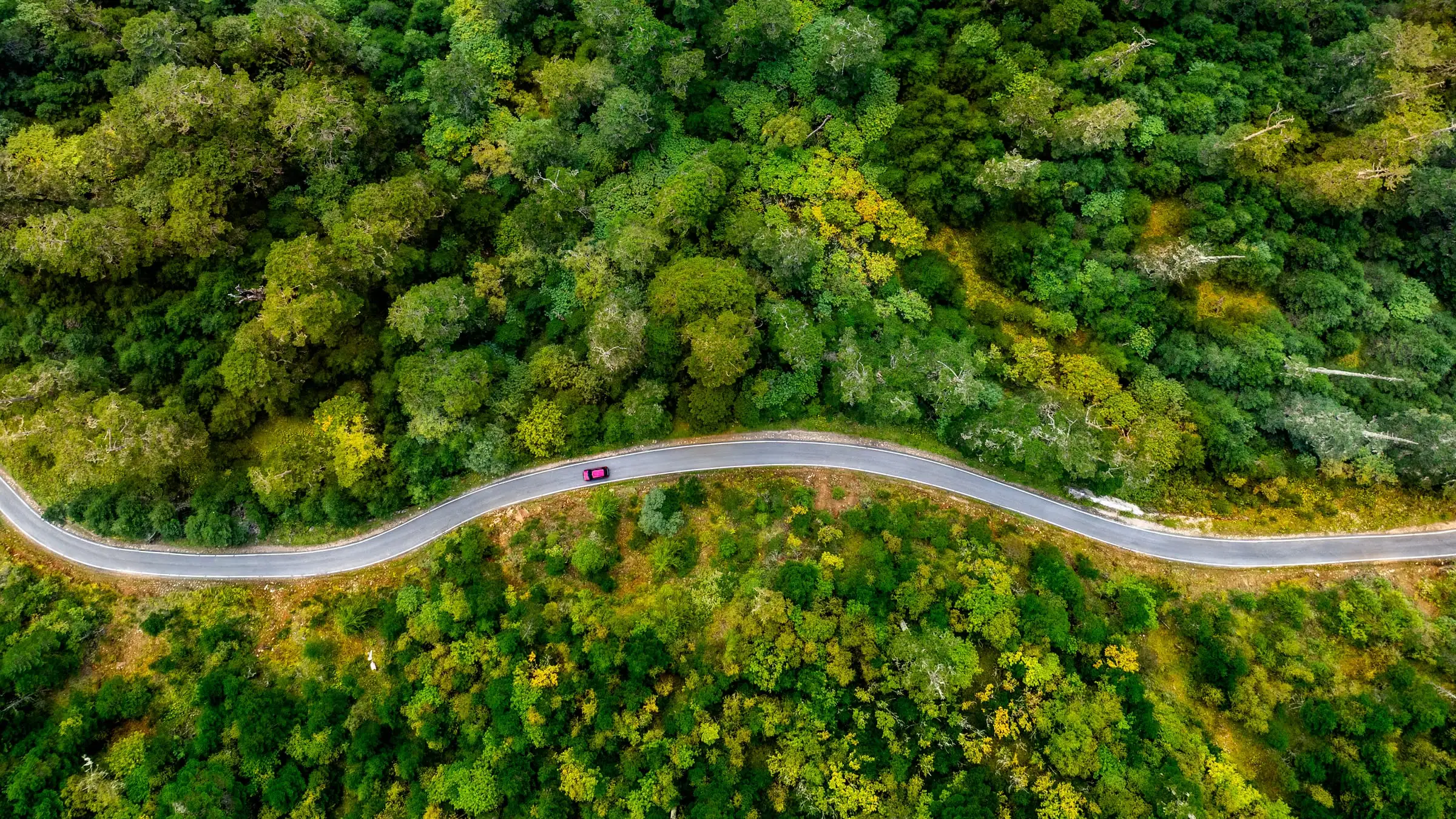
Bhutan's busy southern gateway, where the hills meet the plains of West Bengal.
The main overland entry point from India, a warm commercial town on the border with Jaigaon — the starting point for road journeys up into the western valleys.
Explore Phuentsholing -
Town · 250 m
Samdrup Jongkhar
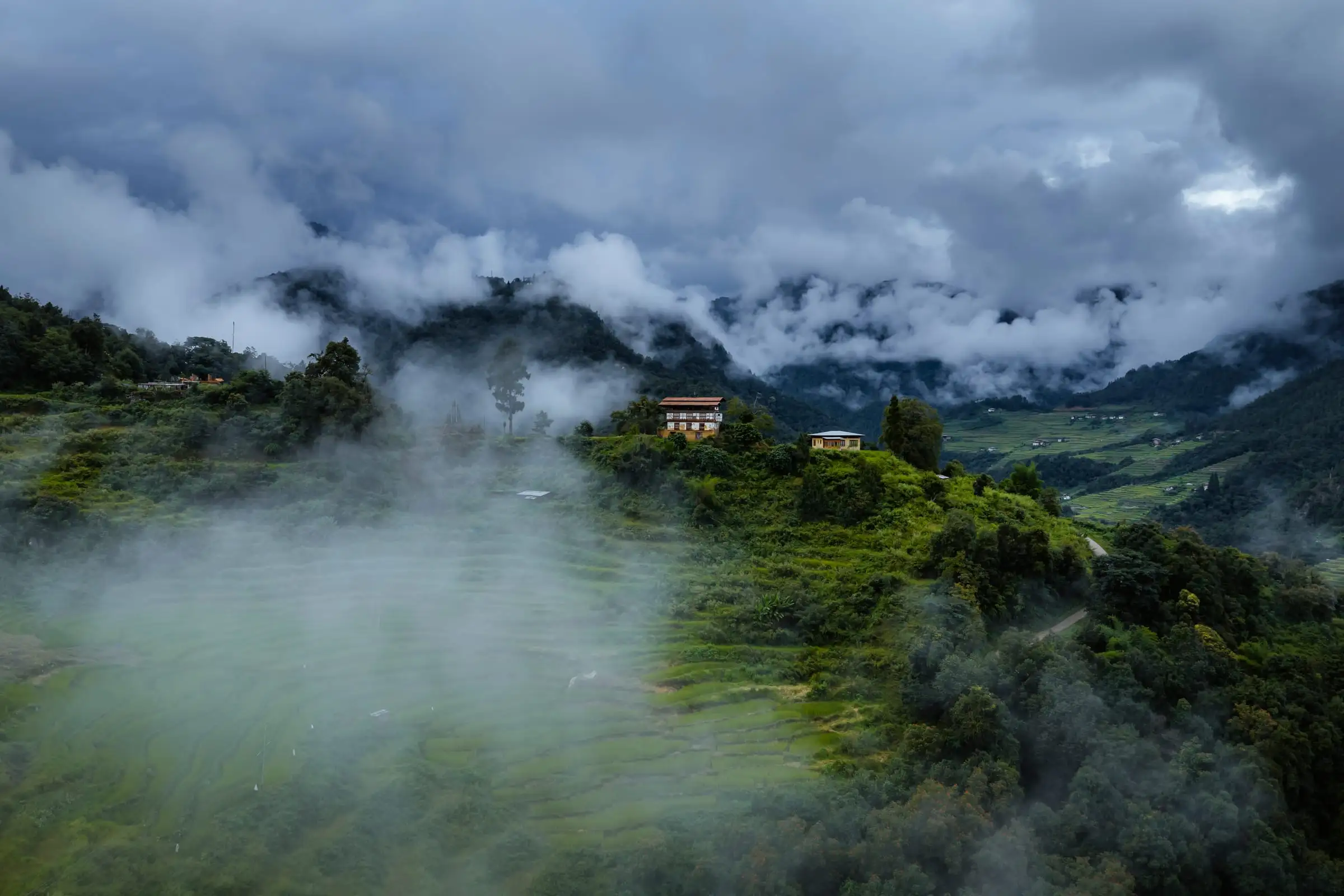
The quiet south-eastern border town that makes a cross-country journey possible.
Bhutan's south-eastern gateway, bordering Assam. Travellers exploring the east often enter or leave here, linking with flights from Guwahati.
Explore Samdrup Jongkhar


Start the conversation
Where would you like to wake up?
Tell us the places that draw you and we will build the route between them.